Why Meta Ads Remain the Highest-ROI Channel for Most Indian Businesses
Despite years of privacy changes, algorithm updates, and rising CPMs, Meta Ads - Facebook and Instagram - remain the highest-reach, most flexible paid advertising channel for Indian businesses reaching consumer and SMB audiences. With over 450 million Facebook users and 230 million Instagram users in India, the scale of reachable audience is unmatched by any other digital platform.
The challenge isn't reach. It's signal. Post-iOS 14, the conversion data that Meta's algorithm depends on has eroded significantly. Running Meta Ads in 2025 requires understanding how to rebuild that signal through Conversions API, first-party data, and campaign structure that works with the algorithm rather than against it.
This guide covers Meta Ads strategy specifically for Indian market conditions - where audience behaviour, platform usage patterns, and conversion economics differ meaningfully from Western benchmarks.
Platform Difference: Facebook vs Instagram for Indian Audiences
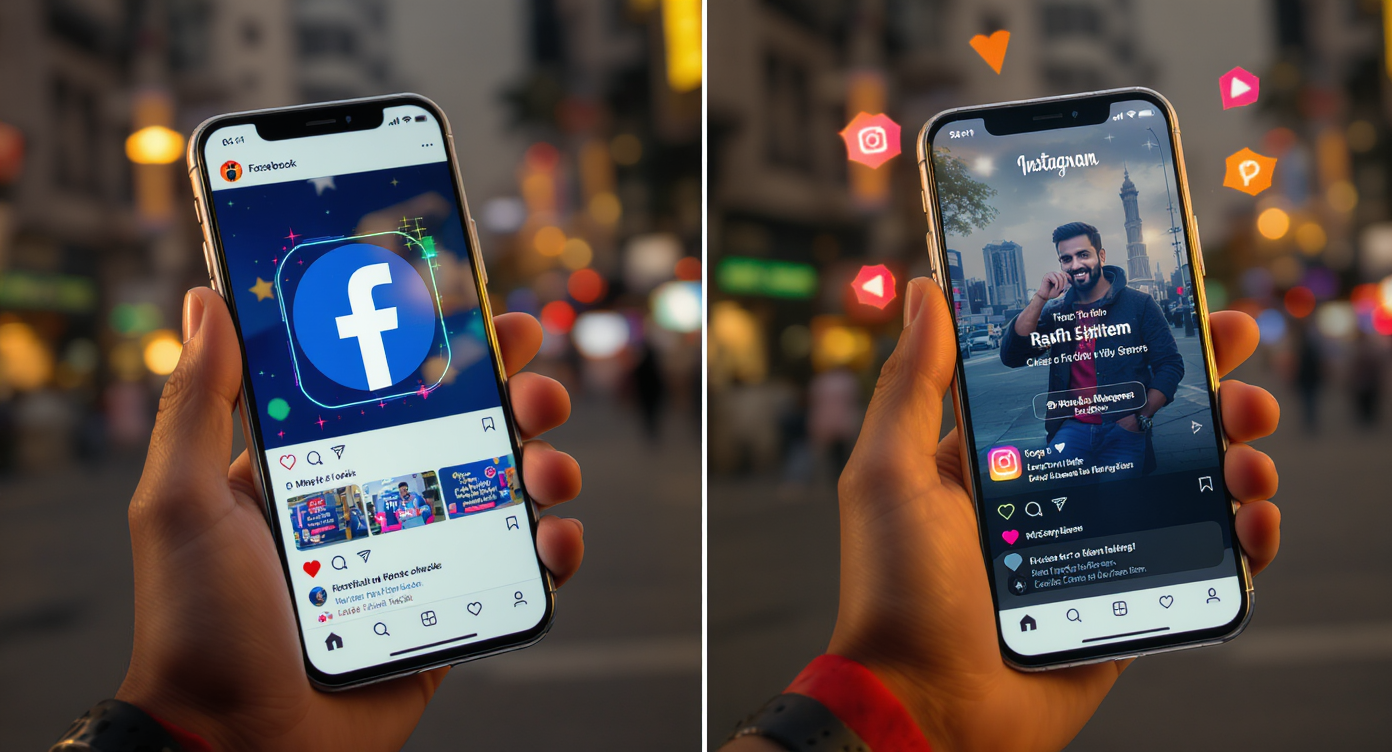
Facebook and Instagram within Meta Ads serve meaningfully different Indian audiences. Running identical campaigns across both without understanding the difference is a common and expensive mistake.
Facebook India: Older demographic (25-55), tier 2 and tier 3 city penetration, stronger for B2B and professional services, performs well for groups and community-based marketing, better for longer-form video content and link-click campaigns. For B2B services, Facebook Feed placements often outperform Instagram.
Instagram India: Younger demographic (18-35), urban-skewing, stronger for fashion, lifestyle, food, beauty, and aspirational consumer categories, performs well for visual products, Stories and Reels placement drives higher engagement for the right categories. For D2C brands targeting urban millennials, Instagram Reels placements are often the highest-ROAS placement in the account.
Use Advantage+ Placements and let Meta's algorithm distribute budget across placements - but monitor placement-level performance in your Breakdown report and exclude consistently underperforming placements if they're consuming budget without proportional results.
Campaign Structure Post-iOS 14
The pre-2021 approach of tightly segmented ad sets (one audience per ad set, granular interest targeting, narrow audience sizes) is counterproductive with modern Meta. The algorithm needs volume and freedom to find converters. Fragmented campaigns starve the algorithm of signal.
The 2025 campaign structure that works for Indian advertisers:
Broad targeting campaign: No interest targeting. Age range, gender (if relevant), India or specific cities. Let Advantage+ Audience find converters within the broad pool. This performs counter-intuitively well once the algorithm has conversion signal - it finds people who look like your converters from a wider pool than manual targeting allows.
Interest/lookalike campaign: Layer interest targeting or lookalike audiences on top of geographic targeting. Keep ad sets large (minimum 500K audience, ideally 1M+). Small audiences restrict delivery and inflate CPMs.
Retargeting campaign: Website visitors (180 days), video viewers (75%+), Instagram profile engagers (90 days), existing customer exclusion. This is your highest-intent audience. Budget here should be 15-25% of your total Meta spend.
Separate campaigns by objective, not audience. Consolidate ad sets within campaigns. Give each campaign enough budget to exit the learning phase (50 optimisation events within 7 days).
Conversion API: Non-Optional for Indian Advertisers
India's mobile-first internet access pattern means a significant portion of your Indian audience uses Safari on iPhone (iOS blocks Meta Pixel after 7 days) or has ad blockers. The Meta Pixel alone misses an estimated 15-30% of conversions in typical Indian campaigns.
Meta Conversions API (CAPI) sends conversion events from your server directly to Meta, bypassing browser restrictions. Setup requires developer involvement - the CAPI fires from your backend when a conversion event occurs (form submission, purchase, sign-up) and passes it to Meta with a match key (email, phone number, or Meta-generated ID).
The impact on campaign performance is significant: better signal quality means the algorithm identifies converters more accurately, which improves audience targeting, reduces wasteful spend, and typically lowers CPL and CPurchase by 15-25% compared to Pixel-only tracking.
For Indian businesses using Shopify (use Meta's native integration), WordPress with WooCommerce (use the official Meta plugin), or custom platforms (developer implementation required), CAPI is the highest-leverage technical improvement you can make to Meta campaign performance.
Creative Strategy for Indian Audiences
Creative is the primary variable that moves Meta campaign performance. Audience targeting matters less than it used to (the algorithm finds your audience). Creative is the main lever you control.
What works for Indian Meta audiences:
Social proof: Reviews, testimonials, user-generated content, before/after results. Indian buyers are risk-conscious. Showing that others have bought and benefited reduces purchase hesitation. Screenshot testimonials from WhatsApp or Google Reviews perform strongly because they read as authentic rather than produced.
Price transparency: Showing price (or "starting from" price) in creative increases CTR for price-sensitive Indian audiences and pre-qualifies clicks. Traffic that already knows the price converts better than traffic surprised by it at checkout.
Hindi and regional language copy: For tier 2 and tier 3 Indian audiences, native language creative (Hindi, Tamil, Telugu, Bengali depending on target region) dramatically outperforms English. Even for English-primary audiences, mixing Hindi phrases ("Seedhi baat, koi bakwaas nahin") adds authenticity and stops the scroll.
Reels and short video: Meta is prioritising video across all placements. For Indian audiences consuming content primarily on mobile, 15-30 second Reels-format video (vertical, native-looking, no production gloss) outperforms static images for awareness campaigns. The hook in the first 3 seconds determines whether the rest of the video gets watched.
Budget Allocation and Bidding for Indian Campaigns
Campaign Budget Optimisation (CBO) at the campaign level is the default recommendation - let Meta distribute budget across ad sets rather than fixing it at the ad set level. CBO consistently outperforms Ad Set Budget Optimisation once campaigns have sufficient signal.
For new campaigns in India: start with ₹1,000-₹2,000/day to exit the learning phase within 7 days (learning phase requires 50 optimisation events in 7 days). Scaling too slowly means perpetual learning phase. Scaling too fast (doubling budgets faster than 20% per week) resets the learning phase and causes performance volatility.
Bidding: Lowest Cost (automatic bidding) is the default and usually best for campaigns without a hard CPL ceiling. Cost Cap bidding allows you to set a maximum CPL - use once you have baseline CPL data and need to maintain margin. Value-based bidding (optimise for purchase value rather than purchase count) is relevant for e-commerce with variable order values.
Indian CPM benchmarks 2025: Feed placements ₹120-₹250, Stories ₹80-₹180, Reels ₹70-₹160. CPMs vary significantly by audience specificity, creative engagement rate, and campaign objective.
Measuring Meta Ads in the Attribution-Uncertain World
Meta's default 7-day click, 1-day view attribution window overcounts conversions - it credits Meta for conversions that would have happened anyway. Compare Meta-reported conversions against your CRM or backend data to understand your actual incrementality.
A more reliable measurement approach: run Meta's Conversion Lift studies (available at sufficient spend levels) to measure the actual incremental lift from your campaigns. For most Indian advertisers at ₹1,00,000+ monthly spend, lift studies provide the clearest picture of true campaign ROI.
For day-to-day optimisation, use a blended CAC metric: total Meta spend divided by total new customers in the period, cross-referenced against Meta-reported conversions. A ratio of 0.7-0.9 (Meta reports 10-30% more conversions than your CRM shows) is normal. Higher than 1.3 suggests significant over-attribution and warrants investigation.